Reflective Practice
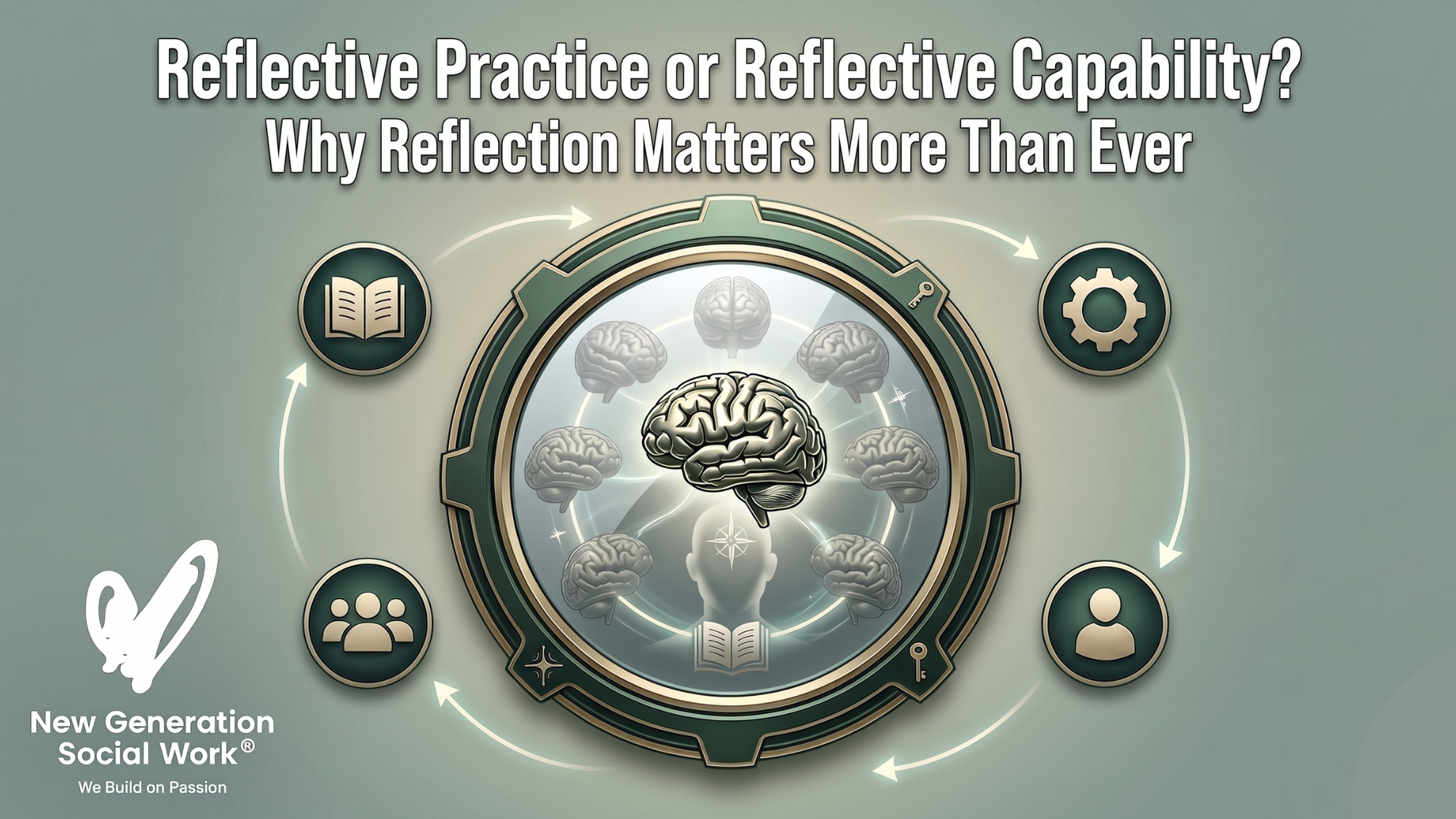
Reflective Practice or Reflective Capability?
Why reflection matters more than ever.
7 min · Alshad Dustagheer
Throughout social work, reflective practice has long been regarded as a hallmark of professional development. It is embedded within professional standards, supervision frameworks, qualifying education, post-qualifying development, and organisational learning cultures. Few would argue against its importance, and rightly so.
However, I wanted to use this edition to explore a concept that I believe is beginning to emerge more prominently within workforce development, organisational learning, and reform implementation: reflective capability.
As Local Authorities continue preparing for reform implementation and future inspection activity, there appears to be an increasing expectation that organisations can demonstrate not only that opportunities for reflection exist, but that reflection is actively contributing to stronger professional judgement, improved decision-making, workforce capability, and ultimately better outcomes for children and families.
From Reflective Practice to Reflective Capability
Traditionally, reflection has often been viewed as an important feature of good professional practice — supervision discussions, reflective conversations, group reflection. In this sense, reflection is something professionals do. I often refer to this as soft reflection; an important process that encourages awareness, learning, and professional growth.
Reflective capability introduces a different perspective. Rather than focusing solely on the activity of reflection itself, it focuses on the professional abilities that reflection develops over time. The ability to analyse information critically, identify patterns, challenge assumptions, understand complexity, synthesise information, exercise judgement, learn from experience, and apply insight to future decision making are all examples of reflective capability in action.
In this context, reflection becomes more than a developmental activity. It becomes a technical capability that organisations intentionally and strategically develop across their workforce.
Why This Matters for Leaders
Fundamentally, it concerns how organisations develop a strategic understanding of capability and how core professional capabilities are intentionally cultivated, supported, measured, and sustained across increasingly complex practice environments.
Perhaps the wider challenge for leaders is no longer simply asking whether professionals are reflective. Increasingly, it may involve understanding how reflective capability is developed, evidenced, and embedded across teams, services, and partnerships as part of a wider workforce development strategy.
Leadership reflections
- —How is reflection currently understood within your workforce development strategy?
- —Do supervision arrangements primarily create opportunities for reflection, or do they intentionally develop reflective capability?
- —What evidence exists that reflective activity is strengthening professional judgement and decision-making?
- —How is reflective learning transferred beyond the individual and into teams, services, and wider organisational systems?
- —How do leaders know when reflective practice has become reflective capability?