Organisational Learning
The Difference Between Learning and Organisational Learning
Looking beyond structural reform.
10 min · Alshad Dustagheer
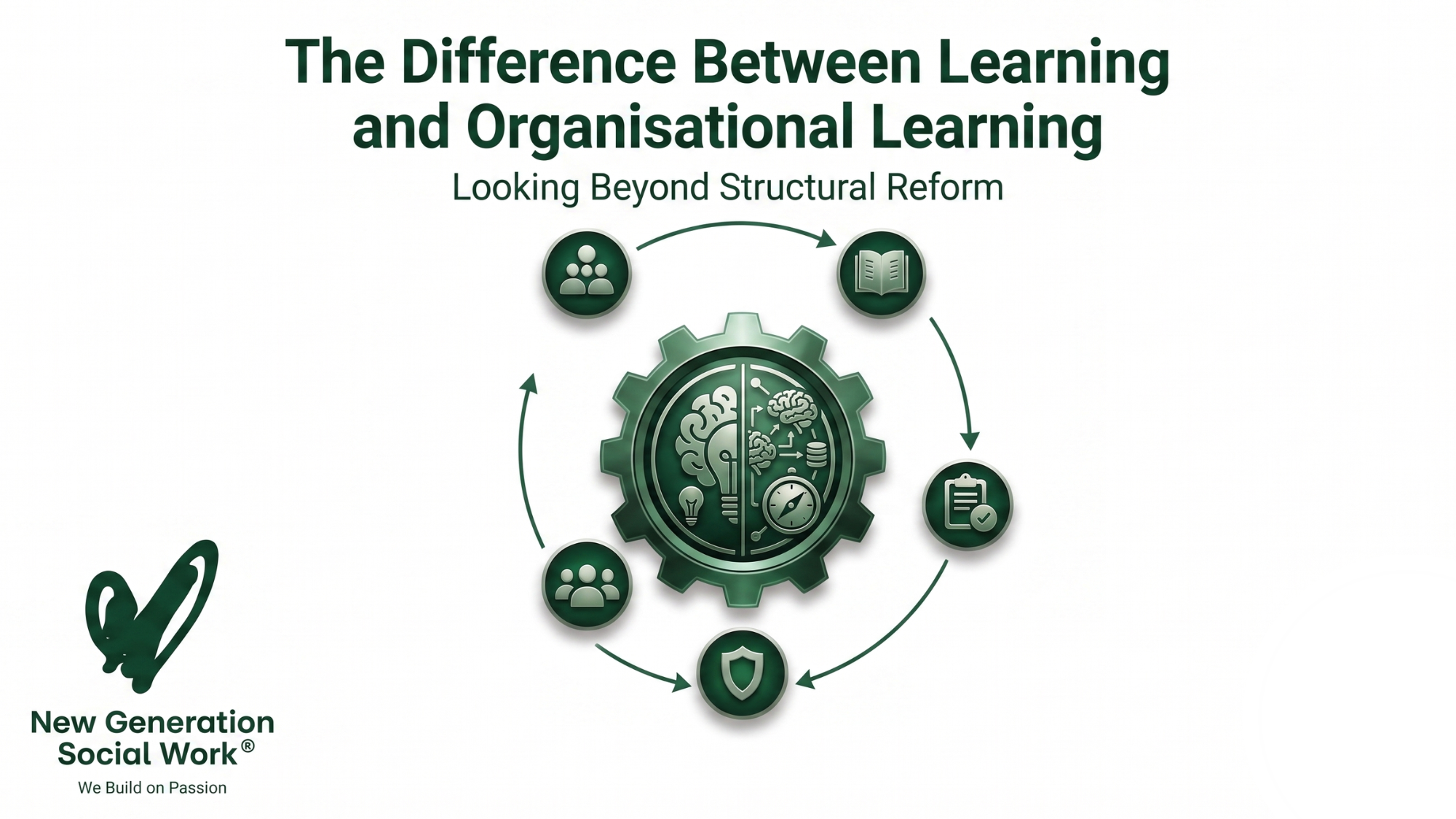
In the first edition of this newsletter, I introduced the idea that alongside the visible structural reform taking place across children's social care, another quieter transition may also be emerging. With much of the attention focused on the restructuring of services, I suggested that organisations may also be experiencing a quieter reform of organisational learning itself.
This distinction is important for leaders to be aware of because change is rarely sustained through structures alone. Structures create the conditions for change and we see this reflected throughout reform guidance in the use of concepts such as "Enablers". In reality, however, it is professionals who ultimately determine whether change becomes embedded, understood, and translated into everyday practice and organisational culture.
Understanding the Difference
The terms learning and organisational learning are often used interchangeably, yet I am increasingly convinced they represent two fundamentally different perspectives that leaders need to be thinking about.
Learning is typically understood as something that occurs at an individual level. A practitioner attends training, engages in supervision, develops a new skill, or deepens their understanding of a particular area of practice. Learning therefore concerns the development of the individual and remains a cornerstone of professional growth and competency development.
However, one of the questions that increasingly interests me is what happens to learning once it occurs? Does knowledge remain with the individual, or does it become something that can influence teams, services, and organisational practice more broadly?
Organisational learning is less concerned with what individuals know and more concerned with what happens to knowledge, insight, and intelligence once they enter an organisational system. It concerns the mechanisms through which learning is disseminated, embedded, and translated into everyday practice.
Why This Matters for Leaders
Most leaders will be familiar with situations where substantial investment has been made into workforce development, training programmes, and learning initiatives, yet the anticipated organisational improvements have not fully materialised.
In many instances, this is not because learning has failed to occur. Practitioners may leave training events with increased knowledge, greater confidence, and stronger awareness of the issues being explored. The challenge often lies elsewhere. Learning has occurred, but organisational learning has not.
Learning Through the Lens of Reform
The Families First reforms are not simply introducing new structures. They are introducing new expectations regarding how professionals work together, make decisions together, learn together, and ultimately develop collective capability.
Integrated Family Help, Lead Practitioner models, Family Group Decision-Making, and Multi-Agency Child Protection Teams all require professionals to develop shared understandings, common language, collective approaches to risk, and new ways of working across professional boundaries. These developments cannot be sustained through individual learning alone.
Leadership reflections
- —How does learning currently move through our organisation?
- —Where does organisational learning sit within our workforce development strategy?
- —How are lessons learned retained when staff leave or roles change?
- —What evidence exists that learning is influencing practice beyond individual development?
- —How are we supporting collective capability across increasingly integrated systems?